

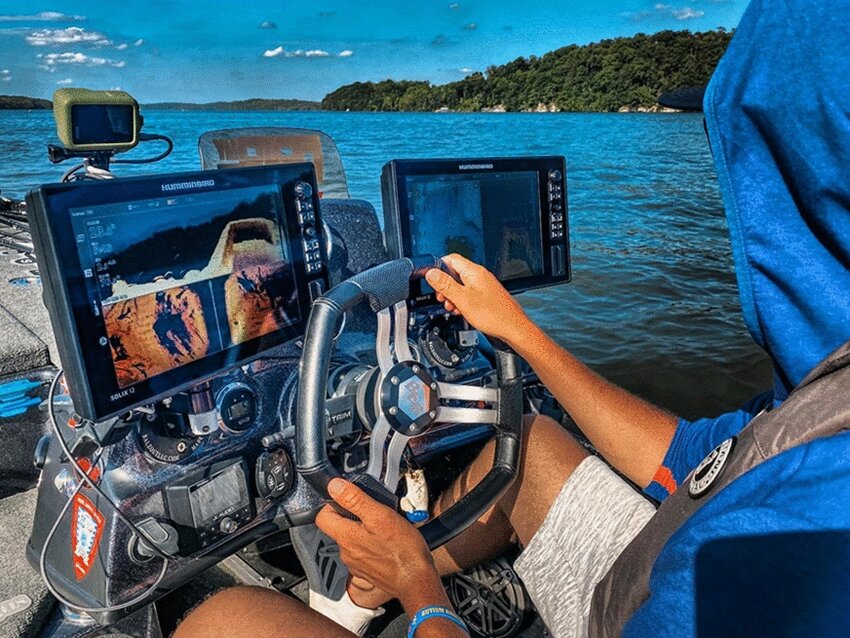
In the realm of angling, the pursuit of bass has long been a cherished endeavor for fishing enthusiasts. As technology continues to advance, so too does the equipment used in this pursuit. In recent years, the world of bass fishing has witnessed a remarkable evolution with the emergence of cutting-edge innovations collectively termed as “bass boat technologies.” These advancements have not only revolutionized the way anglers navigate waters but have also significantly enhanced their ability to locate and catch elusive bass. Let’s delve into the fascinating realm of bass boat technologies, exploring their evolution, impact, and the promising future they hold for anglers worldwide.
Bass fishing has evolved from a leisurely pastime to a highly competitive sport, driving the demand for state-of-the-art equipment and technologies. One of the most crucial components of a bass angler’s arsenal is their boat. Traditional bass boats were characterized by their simplicity, typically featuring a fiberglass hull, basic electronics, and minimal amenities. However, the advent of bass boat technologies has transformed these vessels into sophisticated platforms equipped with an array of advanced features designed to optimize performance and maximize efficiency on the water.
One of the most significant advancements in bass boat technologies is the integration of cutting-edge sonar and GPS systems. Modern bass boats are equipped with high-definition fishfinders that utilize advanced sonar technology to provide detailed images of underwater structures, vegetation, and, most importantly, fish. These fishfinders not only enable anglers to locate bass more effectively but also allow them to analyze underwater terrain with unprecedented clarity, identifying prime fishing spots with pinpoint accuracy.
GPS technology has also revolutionized bass fishing by enabling anglers to navigate vast bodies of water with confidence and precision. Advanced GPS units integrated into bass boats provide real-time mapping capabilities, allowing anglers to create custom routes, mark waypoints, and navigate to specific locations with ease. This level of navigation precision is invaluable for tournament anglers who often need to cover extensive stretches of water in search of elusive bass.
In addition to sonar and GPS technologies, advancements in hull design and construction have played a crucial role in enhancing the performance of modern bass boats. Lightweight materials such as carbon fiber and advanced composites have replaced traditional fiberglass, resulting in boats that are not only stronger and more durable but also lighter and more fuel-efficient. These advancements in hull construction have led to significant improvements in speed, maneuverability, and overall handling, allowing anglers to reach remote fishing grounds with greater ease and efficiency.
Furthermore, the integration of electric trolling motors has emerged as a game-changer in bass boat technologies. Electric trolling motors offer silent and precise propulsion, allowing anglers to navigate shallow waters and maneuver stealthily around structure without disturbing the fish. Moreover, some advanced trolling motor systems feature GPS-enabled autopilot functionality, enabling anglers to maintain position and control boat heading with unmatched accuracy, even in adverse weather conditions.
Another notable innovation in bass boat technologies is the integration of lithium-ion battery systems. These lightweight and high-capacity batteries provide anglers with extended runtime for their onboard electronics and trolling motors, ensuring uninterrupted performance throughout long days on the water. Additionally, lithium-ion batteries can be recharged quickly, minimizing downtime between fishing outings and maximizing productivity on the water.
The evolution of bass boat technologies has also extended to the realm of angler comfort and convenience. Modern bass boats are equipped with a host of amenities designed to enhance the angling experience, including spacious casting decks, ergonomic seating, and ample storage compartments for gear and tackle. Moreover, advancements in marine upholstery and materials have resulted in interiors that are not only stylish and comfortable but also highly durable and resistant to the elements.
Furthermore, connectivity features such as wireless networking and smartphone integration have become increasingly prevalent in bass boat technologies. Anglers can now seamlessly connect their smartphones or tablets to their boat’s onboard electronics, allowing them to access real-time weather updates, stream live sonar data, and even control certain functions remotely. This level of connectivity not only enhances the angler’s situational awareness but also provides added convenience and flexibility on the water.
As bass boat technologies continue to evolve, so too do the possibilities for innovation and advancement in the world of angling. Future developments may include advancements in artificial intelligence and machine learning, enabling boats to autonomously analyze underwater terrain and identify optimal fishing locations based on historical data and environmental conditions. Additionally, advancements in propulsion systems such as hydrogen fuel cells and electric outboard motors may lead to even greater efficiency and sustainability in bass boat design.
In conclusion, the evolution of bass boat technologies represents a paradigm shift in the world of angling, offering anglers unprecedented capabilities and opportunities to enhance their fishing experience. From advanced sonar and GPS systems to lightweight hulls and electric propulsion, these innovations have redefined the way anglers navigate waters, locate fish, and ultimately, catch bass. As technology continues to advance, the future of bass fishing looks brighter than ever, with endless possibilities for innovation and exploration on the horizon.
